【Interviews with IAR faculty members】Satomi KANNO / Tsutomu FUKUDA / Masumi KAMEDA / Yukinori KAWAE【FY2025】
The Institute for Advanced Research serves as the center of Nagoya University’s intellectual life through promoting scholarship, supporting outstanding research, nurturing the next generation of researchers, and coordinating international research exchange. The Institute also functions as an academic hub that is open to the rest of Nagoya University and beyond. This role is notably fulfilled through planning and implementing various initiatives, including the organization of the Nagoya University Lecture, considered as the university’s most important academic lecture series, and the IAR Symposium, a forum designed to create a highly transparent research environment by presenting cutting-edge research conducted at Nagoya University. Essential to these activities are the Institute’s faculty members who, in addition to their advanced research, conduct administrative and operational tasks for the Institute’s major activities. We spoke with four of them.
(Interviewer: Haruka KAMIGUCHI / Text: Tatsuro AYATSUKA, Interview Date: December 9, 2025)
Satomi KANNO
Full-time IAR faculty member (in charge of Life Sciences) / Associate Professor
Area of specialization: Plant physiology
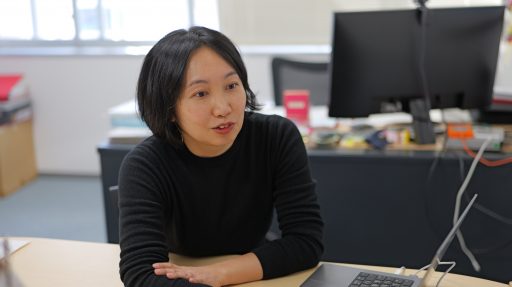
Dr. Kanno is conducting research using uniquely developed imaging equipment targeting plant cells to whole plant, all for the objective of elucidating the mechanisms of nutrient absorption in plants. She has successfully analyzed nutrient absorption dynamics in live plants by developing a method to insert isotopes of nutrient elements into plants and image the beta rays emitted from them as visible light. This technology is expected to unlock unresolved mysteries of plant physiology and lead to practical applications such as efficiency increase in fertilizer utilization. Dr. Kanno is actively involved in interdisciplinary research, wherein she compares different proteins that absorb phosphate in various organisms such as bacteria and archaea, thus studying their coevolution with the environment.
―Could you give us a general idea of how full-time IAR faculty members engage in administrative tasks?
All full-time faculty members at the Institute have their respective area of specialization, be it in humanities and social sciences, science and engineering, or life sciences. To organize lectures within the framework of a major academic event, such as the Nagoya University Lecture or the IAR Symposium, full-time IAR faculty members draw on their knowledge and expertise to select speakers and work out details of the event. Each year, the full-time faculty members take turns in organizing events in their respective fields. I am in charge of events related to life sciences. In the 2023 Nagoya University Lecture, we had the honor of inviting Prof. Aaron Ciechanover, laureate of the 2004 Nobel Prize in chemistry, who delivered a lecture on medicine in the new era.
―Could you tell us what you do concretely as part of your administrative duties?
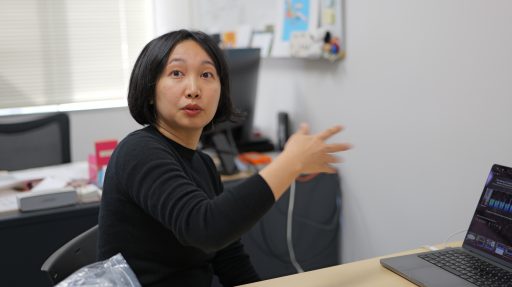
One of my main duties is running a joint research program with the University of Freiburg in Germany to nurture young researchers. The two universities each select two of their young researchers and send them to the other university for one month. We cover their travel and living expenses. What is unique about this program is that a one-month stay is repeated the next year with the same researchers, one month in Year 1 and another month in Year 2.
―That’s unique indeed, supporting the same researchers’ overseas stay for two consecutive years. Tell us more about this program’s virtues.
In this program arranged like this, even if the participant researchers stay at the partner university only for a relatively short period, when they know that they will return the next year, they usually maintain ties with their colleagues at the host university over an extended period, ideally leading to future joint research efforts. Also, from my own experience, I think it’s very important for young researchers to see firsthand as many sites of actual research and experiments as possible. There is a world of difference between reading other researchers’ papers while knowing what goes on behind the scenes and reading them without that kind of knowledge. So I believe it’s highly significant that young researchers have this kind of experience, which trains them in their sensibility and discernment as well.
―What about your other responsibilities?
I have diverse responsibilities, but overall, for some reason, I have frequently been involved in launching new programs. The FRAIAS (Freiburg Institute for Advanced Studies)-Nagoya Joint Fellowship Program, which I just talked about is one of them. I also launched the New Year IAR networking event last year to promote interaction among young researchers. This is intended as a forum where young researchers, who don’t usually have many opportunities to meet other researchers in different areas, get together at the beginning of the new year. We also operate a kids’ room as a way to support parenting by young researchers. They can come to work on the campus with their children and look after and stay close to them. I’m also a parenting researcher, and so I understand the value of initiatives like the kids’ room. I think it’s very important to have frequent and casual conversations with different people to generate ideas to improve the workplace environment.
Tsutomu FUKUDA
Full-time IAR faculty member (in charge of Science and Engineering) / Specially Appointed Senior Lecturer
Area of specialization: Elementary particle physics
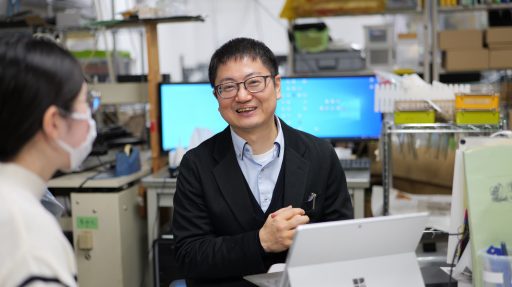
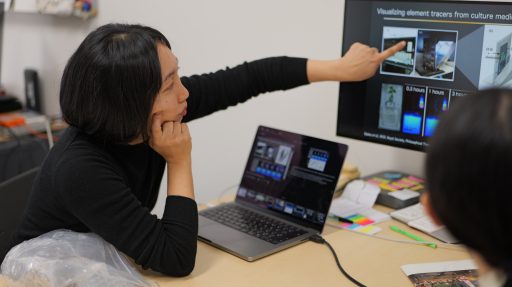
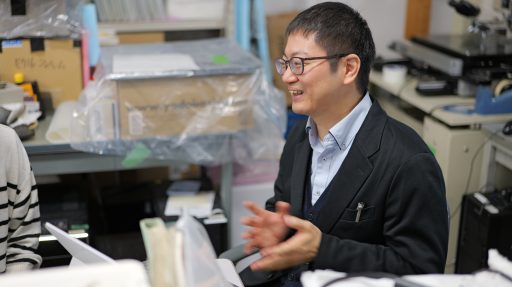
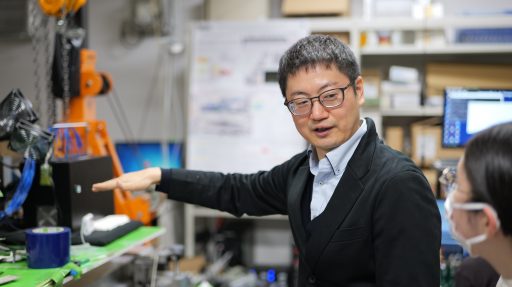
Dr. Fukuda researches the elementary particle neutrino and the origin of the universe, making full use of nuclear emulsion plates that record charged particles with the world’s highest precision of less than one micron. He is the representative of the international joint research project Neutrino Interaction Research with Nuclear Emulsion and J-PARC Accelerator, nicknamed “NINJA,” aiming at the discovery of new neutrinos and unknown neutrino interactions. In this project, an artificial neutrino beam is generated at J-PARC, a high-intensity proton accelerator facility located in Tokai Village, Ibaraki Prefecture, and used to irradiate specialized detectors based on nuclear emulsion and water target for high-precision measurement in an attempt to uncover mysteries surrounding the neutrino.
―Could you tell us about your administrative responsibilities at the Institute?
First of all, I am in charge of running the lecture series called “Appreciate the Fun of Research,” aimed at first- and second-year undergraduates, and the Nagoya University Lecture, which is considered the most important academic lecture series at Nagoya University. I handle YLC program faculty open call, organizing information meetings, checking recruitment guidelines, and registering applicants. I have handled international exchange events such as the UBIAS Working Group Meeting and a lecture by Prof. Oron Catts, Director of the Institute of Advanced Studies at the University of Western Australia. I also look after IT-related matters, including the management of the Institute’s official website and email servers and IP addresses.
―Tell us more about the Institute’s unique lecture series “Appreciate the Fun of Research.”
One of the Institute’s missions is, “As an academy within the University, the Institute introducing excellent research to members of the University” to promote scholarship. We are doing just that through the “Appreciate the Fun of Research” lectures. This is designed for first- and second-year undergraduates who are still new to university life. Each year, we invite about 15 researchers who represent Nagoya University with their outstanding research achievements in a wide variety of fields as lecturers. The purpose of the lecture is to introduce students to the appeal of scholarship and help them discover the fun of research, which is different from the kind of “study” they experienced up until high school. In organizing this lecture series, I have selected lecturers and provided support on the day of the lecture to ensure its smooth running.
―What is impressive about this lecture series is the lineup of speakers. So far, President Naoshi Sugiyama and prominent researchers from Nagoya University, and distinguished researchers from outside the University with close ties with the university, have served as lecturers, including Dr. Sumio Iijima, famous for his discovery of carbon nanotubes. Tell us about the challenges and rewards involved in organizing this lecture.
To be sure, it is not easy to select lecturers and coordinate lectures, but personally, I don’t regard my tasks negatively, and I actually enjoy them. I have the experience of serving as the representative or section leader of international joint research projects, leading groups of varying sizes from 50 to several hundred members. Perhaps the coordinating and communication skills that I cultivated through those projects are now proving useful. Most of all, I really appreciate the opportunity to speak directly with renowned researchers who are otherwise normally difficult to invite. I also find the contents of the lectures edifying. I’d be pleased if the students were inspired by the lectures so that they spend their university life with high aspirations. I hope that this exceptionally rich and valuable lecture series will continue to attract many students.
Masumi KAMEDA
Full-time IAR faculty member (in charge of Humanities and Social Sciences) / Associate Professor
Area of specialization: History of emotion
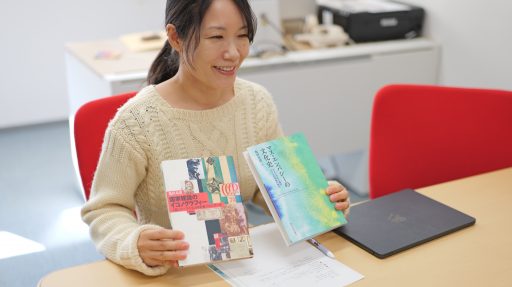
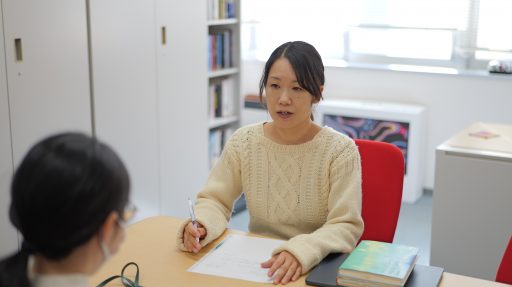
Dr. Kameda researches the influence of propaganda on the formation of people’s sense of belonging to a nation. This research interest was inspired by her two-year stay in Croatia, where she met and talked with local residents who had undergone change of nationality multiple times during the region’s turbulent years. In her research, she has unraveled how propaganda penetrates deep into people’s emotions. Currently, she is studying the process by which people’s emotions are shaped by advertising and cultural industry by comparing the United States and the Soviet Union. Her representative publications (in Japanese) include Iconography of Nation Building: Propaganda of the Five-Year Plans in the Soviet Union and Yugoslavia (Tokyo: Seibunsha, 2014) and A Cultural History of Mass Empathy: Emotion and Politics in the 1930s in the U.S. and the Soviet (Tokyo: University of Tokyo Press, 2023).
―Since you assumed your post at the Institute in September 2025, you have already handled many important projects. Could you tell us what you are working on at the moment?
My main focus is managing international academic exchange. One project of international collaboration that is attracting attention from the whole of Nagoya University is the University Based Institute for Advanced Study (UBIAS). It is a network of more than 40 advanced research institutes all over the world. It is a great privilege for me to be able to interact, through this project, with researchers from different parts of the world who are active at the forefront of their respective fields. Incidentally, many researchers affiliated with the UBIAS are in humanities and social sciences. So perhaps for this reason, I find it relatively easy to work in this environment while drawing on my expertise. As a UBIAS activity, we have a Directors’ Meeting every two years, which gathers together the representatives of all member universities. In early November 2025, the University of Ghana hosted the meeting, which I attended along with Prof. Sakakibara, the Institute’s Director, and Prof. Kawae.
―Was there anything particularly impressive about the Directors’ Meeting at the University of Ghana?
Before attending, I had imagined it to be a meeting where the heads of the member universities meet and make formal agreements, as the name suggested. In reality, I was surprised to find that it was carefully programed and organized like an academic conference. We covered a wide range of topics, many serious ones we discussed in depth, including AI utilization and the relationship between academic research and the State and politics. Moreover, all the attendees had a positive critical spirit, and so the discussions became quite heated at times. It was incredibly passionate. I was impressed by the democratic atmosphere where everyone was able to freely voice their opinion. For example, even on the seemingly simple topic of the use of English as the official language of international meetings, our discussion developed into various directions, touching on the past colonial rule in some countries, the difficulty experienced in the meeting organization and participation by those from non-English-speaking countries, and so on. Overall, the hospitality of the people at the University of Ghana was also impressive. I was able to enjoy Ghanaian culture through local tours and dance parties. It was a valuable opportunity to go and observe in person how the UBIAS was run by those people.
―Could you tell us how you personally view your responsibilities at the Institute?
My dream is to be someone who is called a “thinker,” someone whose opinions on society and the world matter, beyond the arena of her area of research. For this, it is not enough to just read the news; I believe there are many things I can truly understand only by becoming involved as a stakeholder myself. My responsibilities at the Institute positively impact me and my research. I hope to learn more about contemporary society from a broader perspective.

Yukinori KAWAE
Professor, Center for Digital Humanities and Social Sciences
Area of specialization: Egyptian archaeology
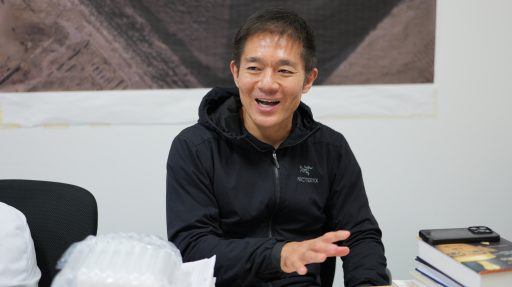
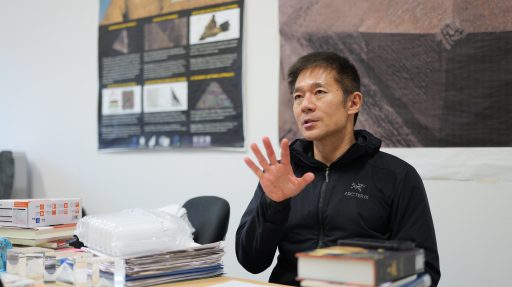
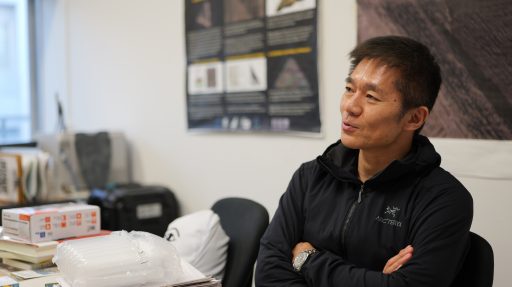
Dr. Kawae was a full-time IAR faculty member from October 2018 to December 2024. Since January 2025, he has been a Professor at the Center for Digital Humanities and Social Sciences, in addition to his part-time IAR role. As an Egyptologist, he has conducted research that includes excavations in the Pyramid Town in Giza, Egypt, and structural analysis of the three great pyramids of Giza. He realized three-dimensional measurement of the pyramids using laser scanners and drone-aided aerial photography. Following the on-site recording, he is currently analyzing the data, whose extreme precision should enable him to examine even the shape of every single stone. As part of his outreach activities, he has made numerous media appearances and runs his own YouTube channel, “Ancient Egypt by Yukinori Kawae” (mainly in Japanese), which has over 300,000 subscribers.
―You used to be a leading full-time IAR faculty member, starting from October 2018. Could you tell us about your activities during that period?
Up until September 2025, when I fully handed over my role to Dr. Kameda, I was mainly in charge of international academic exchange, especially within the framework of the University Based Institute for Advanced Study (UBIAS). I was also in charge of managing the Nagoya University Lecture and the IAR Symposium in the areas of humanities and social sciences, as well as the launch of online events.
―Could you tell us more about your activities relating to the UBIAS?
From 2021 to last year, Nagoya University’s IAR was one of the three IARs called the “Coordination Trio,” which handles practical operations within the Steering Committee. As part of this responsibility, we hosted the 2023 Directors’ Meeting at Nagoya University. This meeting assembles the representatives from around the world every two years. I looked after roughly everything, from coordination with all representatives to organization of the program of the day. Today, when I see researchers who were at the meeting, they all say things like “Yuki, the Nagoya meeting was great!” to me, which makes me really happy. It really drives home the importance of holding an in-person meeting. The meeting agenda itself is important, but you can’t forget the close ties that we form with people by eating together and introducing Japanese culture to them. As anyone involved in international exchange on the ground should know, the benefits of personal encounters are not easily definable, but as with research, you repeat trial and error, and you eventually arrive at something positive. I think despite the ambiguity, interpersonal ties are important in maintaining organizational relationships. Last year, I had Director Sakakibara and Dr. Kameda attend with me the Directors’ Meeting hosted by the University of Ghana, which was one of the Coordination Trio along with Nagoya. It was great that I was able to personally introduce Dr. Kameda as my successor to the UBIAS members on that occasion and see her warmly received, which I suppose was largely due to her personality.
―What do you find particularly interesting about international exchange, and what do you expect from the Institute in the future?
Being involved in international exchange, I was able to observe firsthand how ideas and ways of thinking differ from one country to another, or one culture to another, on many topics. For example, AI is a hot topic right now, and different countries show different approaches and attitudes to AI, depending on their situations. For some, expenses related to AI use is a huge burden, whereas others are more concerned about data leakage to other countries. AI is bound to remain relevant to academic research in many ways. So I think the Institute should determine how to deal with it through repeated discussions with people representing various domains and values.